
Update on Modern Lab. We did a few things in last week’s modern lab.
1. Destressed! Modern physics is tough. There is no getting around it. You start thinking about relatively and your gray matter hurts! So we had a lighter than usual lab week to give our brains a moment to catch up.
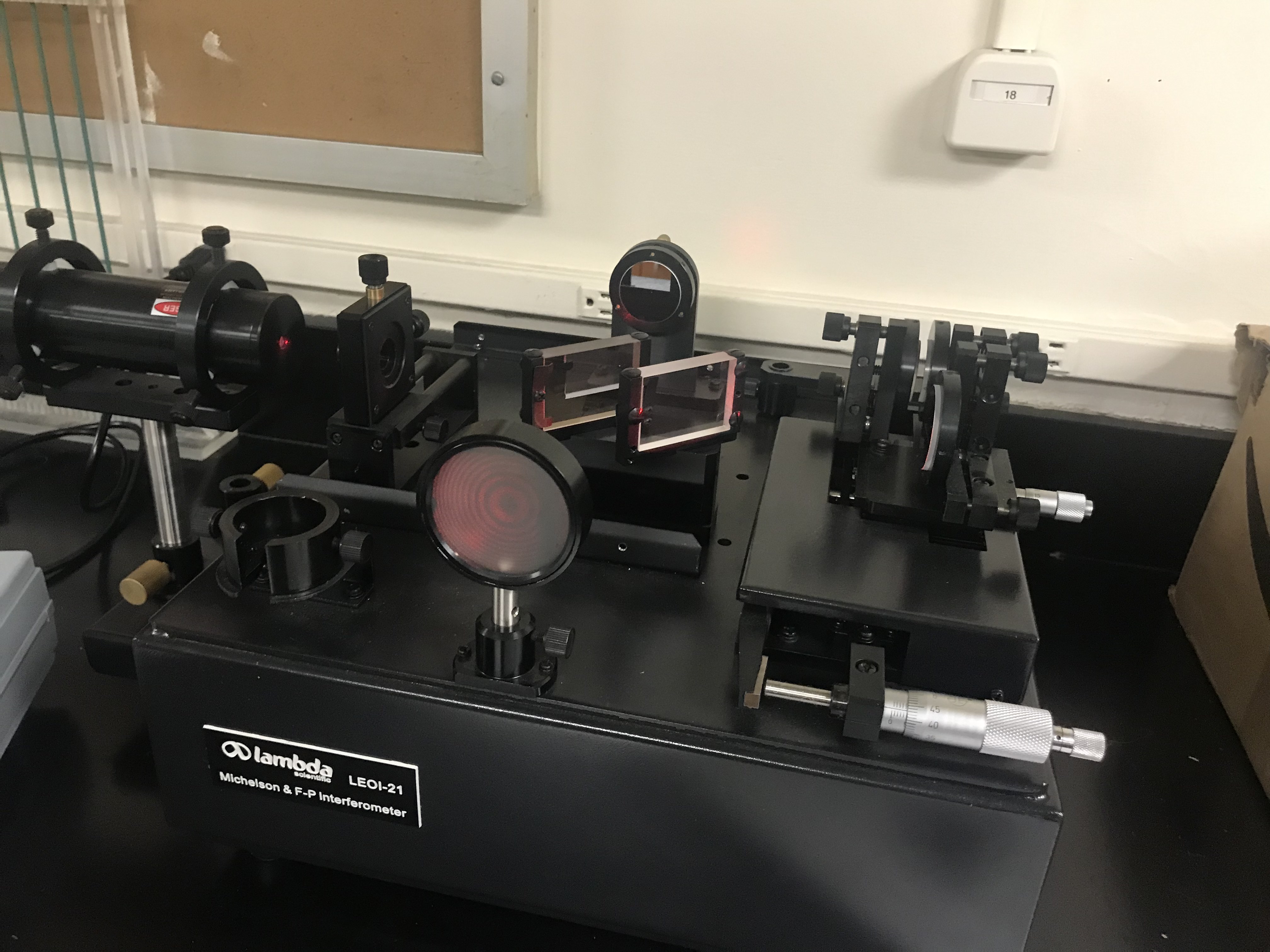
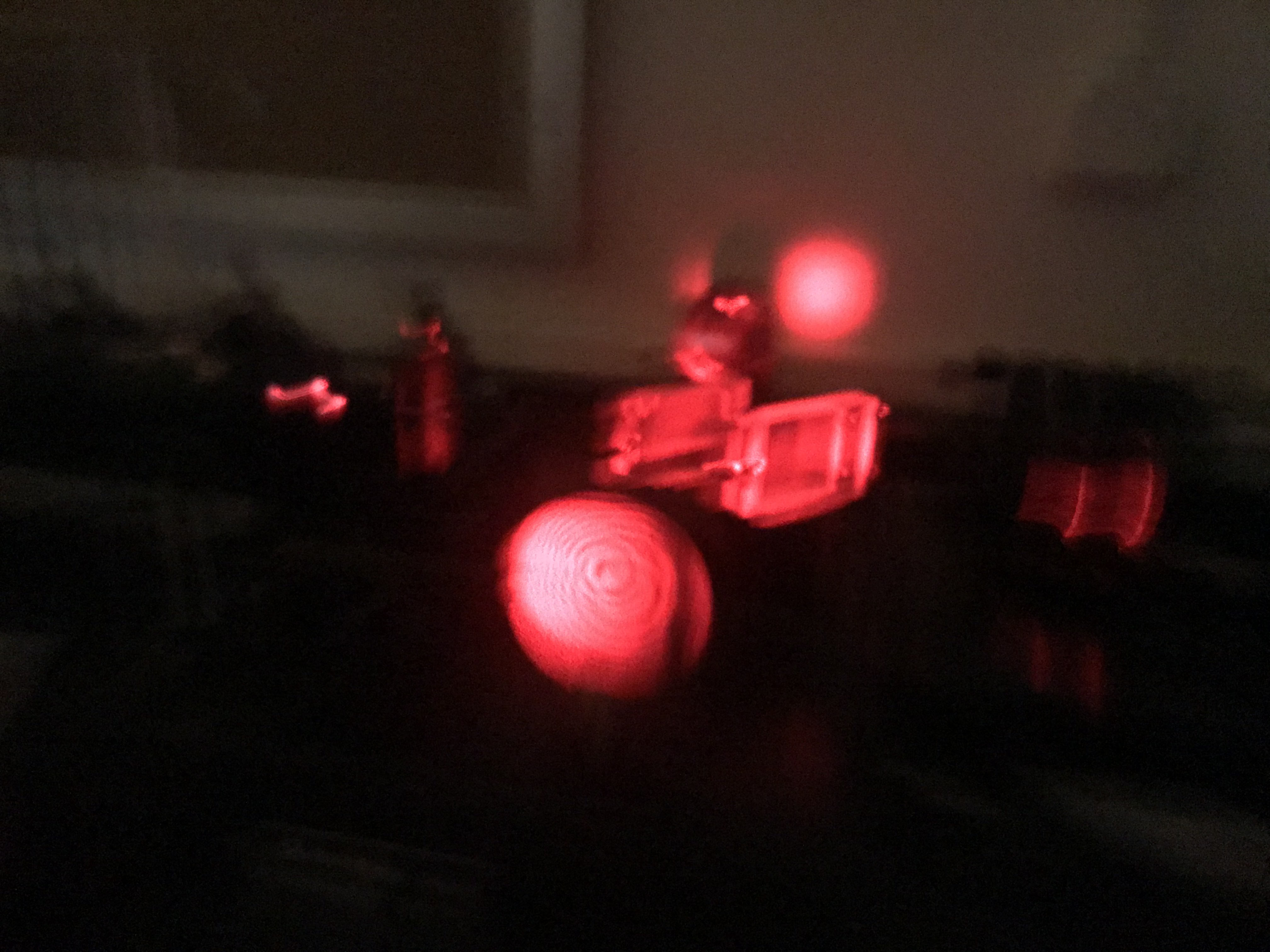
2. Interferometer v1 – We have these cool Interferometers from Lambda where everything is already set up for the students. This is neat because each optical element is already placed in the correct place. This week we used this to measure the wavelength of the laser. We do this by changing the path length of one of the arms. We did this measurement as a class. (MUST REMEMBER TO INCORPORATE THE CONVERSION OF THE MICROMETER – WHICH I FORGOT!)
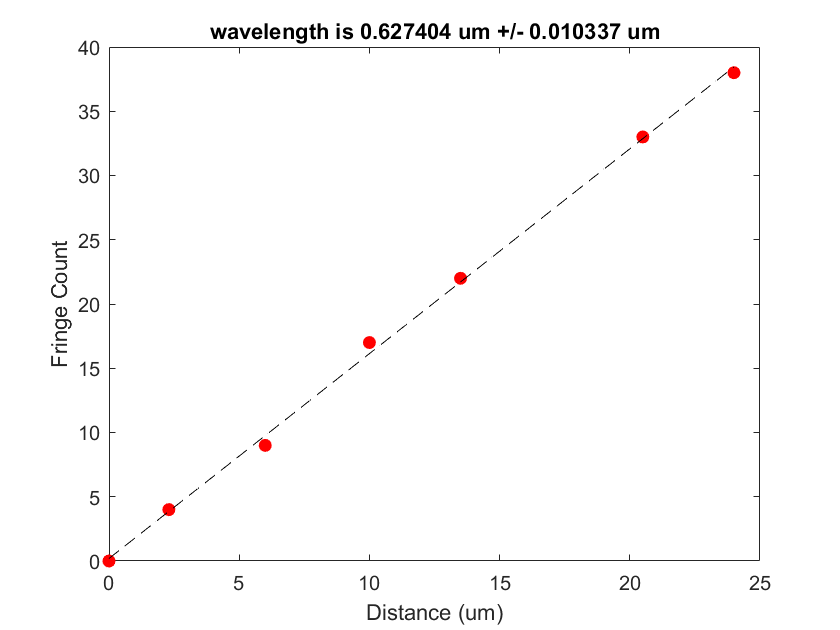
The HeNe wavelength is 627 nm +/- 10 nm. Not bad for a quick measurement. Hopefully the students will do better. 🙂
Next week, the students will build their own interferometer with Thorlabs components. I am so excited!
3. Writing a Proper Lab Report – I gave a brief presentation on scientific writing. The presentation is here. Basically its about condensing your paper to the key facts, schematic, and graph. I recommend students use ideas learned in the Pyramid Principal.
https://cosmicpathways.org/wp-content/uploads/2021/09/the-pyramid-principle.pptx
4. Curve Fitting – Hopefully I got the error analysis right. One of the problems with Matlab is that common tasks like curve fitting can get shifted into a toolbox and it is hard to do anything without having the toolbox. I had I known I would have bought the darn toolbox. 🙁 Updating the software is a PAIN. So I tried to figure it out from the help files.
%%%%%%%%%%%%%%%%%%%%%%%%%%%%%%%%%%%%%%%%%%%%%%%%%%%%%%%%%%%%%%%%%%%%%%
%%% This Experiment measures the wavelength of laser using an      %%%
%%% interferometer.                                                %%%
%%%%%%%%%%%%%%%%%%%%%%%%%%%%%%%%%%%%%%%%%%%%%%%%%%%%%%%%%%%%%%%%%%%%%%

%% Data - Input Data Here
Distance     = [0, 2.3, 6, 10, 13.5, 20.5, 24];         % ticks, 100 ticks = 1 mm
FringeCount  = [0, 4,   9, 17, 22,   33,   38];

Distance     = 2 * Distance;               % X 2 there and back again
Distance     = Distance / 100;             % convert to mm
Distance     = Distance * 1000;            % convert to um
Distance     = Distance / 20;              % Micrometer provides a factor
                                           %  of 20 in actual movement


%% Get the Slope
[Fit_Result, S]      = polyfit(Distance,FringeCount,1);
slope                = Fit_Result(1);
wavelength           = 1 / slope;
CVMat                = (inv(S.R)*(inv(S.R))')*S.normr^2/S.df;
ErrorInSlope         = sqrt(CVMat(1,1));
PercentError         = ErrorInSlope/slope;
Uncertainy           = wavelength * PercentError;


%% Plot Data
% Show Data
plot (Distance, FringeCount, 'ro', 'MarkerSize',6,'MarkerFaceColor','r')

% Add the Fit
hold on
dis = 0:.1:Distance(length(Distance));
plot (dis, slope * dis + Fit_Result(2), '--k')
hold off

% All labels
OutputStr = sprintf ('wavelength is %f um +/- %f um', wavelength, Uncertainy);
xlabel (' Distance (um) ')
ylabel (' Fringe Count ')
title ( OutputStr )
This lab is Powered by Thorlabs



Leave a Reply